

DAN LYLE: Mainstream – A Quick Snapshot
Moving rugby from 'niche' to 'mainstream' What does it mean? And how do we get there?

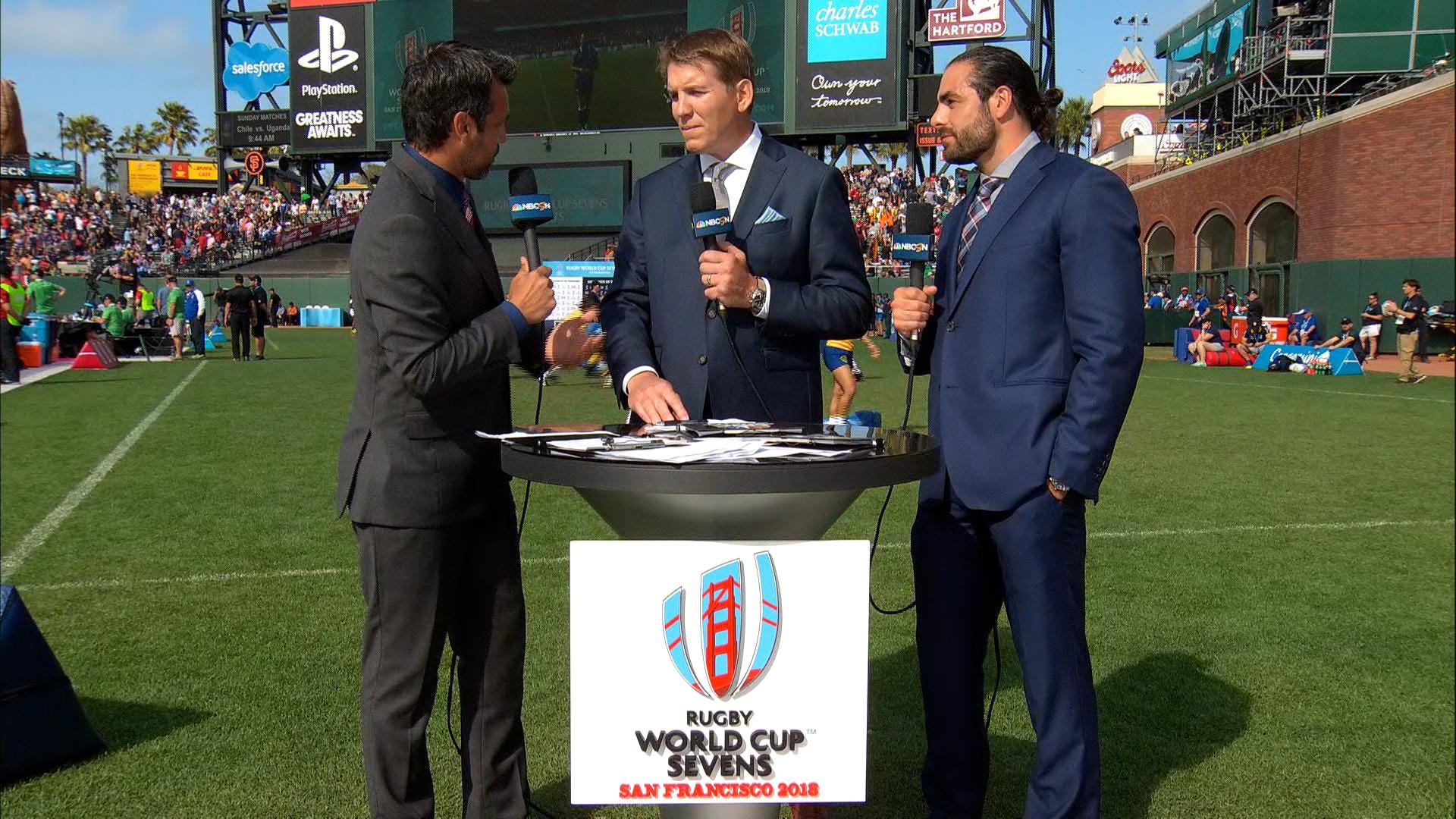
Written by Dan Lyle | The Overload
What is mainstream? The definition in sports would be widely accepted by fans, leagues and media, and more generally or simply used and or recognized by the majority of people in a society or culture.
So the goal, or notion, is for rugby to move from a niche to being fully integrated into everyday sports experiences to thereby becoming mainstream. A quick definition of integration from a rugby perspective (my own) would be for youth/after school programs to have rugby (YMCA, Boys and Girls Clubs, CYO, JCC, Parks and Rec, etc.) — a full adoption and sanctioning by all 50 states scholastically for high school, NCAA/Varsity status for women and or men (NCAA for women, acceptance in the athletic department offices for men), thriving and sustainable men’s and women’s professional leagues, robust community rugby & clubs (mini’s to vets) and national teams that can compete with the best in the world.
Of course, what comes with this or is a result would be a robust social, public relations and media apparatus that is spilling off content to every corner of consumption and then sponsorship and revenues reach levels that are needed to annually grow participation, fan bases as well as attract the best and brightest from in and outside of the sport who are seeking to be a part of rugby whether that be players, great coaches, administrators or influencers.
I have written articles about the data sets and analytics needed to look at both our community and high performance verticals that would allow American rugby to begin to write a plan or blueprint, and thus the evergreen templates and tactics that would allow rugby a starting point to then begin to climb the ranks and competition above us both domestically and internationally.
However, I wanted to stay on the theme of mainstream and share some personal stories and observations that begin to add color to the title of this article.
So, starting with my kids, boys ages 16, 16, and 15. They do not watch sports like I did as a kid their age, meaning they do not sit down for 2-3 hours straight with only bio and food breaks for just about any sport or occasion. What they would prefer to do is watch something like the NFL Network’s rapid-fire coverage where they are showing games, highlights, and stats the entire time. With the advent of fantasy football, they are watching players 90% more than they are watching teams. The two big ones are the NFL and the Premier League soccer where they have multiple teams with their “boys” and it is one of the primary ways they communicate on a daily basis with their friend groups. Of course I would be remiss if I did not mention college basketball and March Madness and how that propels interaction for that sport at both the college and NBA levels. Following multiple teams, because the league and hence a sport has built these online competitions that are easy to use, engaging each customer with multiples of players or teams, sharable, mobile and free is paying dividends. Not only are people desiring to go to games, the live entertainment part of things, but they are encouraging all ranges and ages of fans to interact seven days a week in person and online. The older and more independent a fan gets, the more monetization takes place as they go to games, engage with sponsors, buy merchandise, all while solidifying the relationship because now they are in person with their friends at draft and watch parties, tailgating, etc.
The second way they interact with sport is through gaming. They own FIFA, Madden and NBA2K, and while those have taken somewhat of a back seat to fantasy and real high school sports and attending games themselves, it further illustrates how those sports are owning their fan share. FIFA (now EA Sports FC) makes about $4 billion annually and has sold over 325 million games, almost the entire population of the USA. All of the consoles run each of these games so they are universally accessible, and for that matter basketball, soccer and football are on the main stream broadcast networks with one or two paywalls/subscriptions depending on the sport, league, etc.
The third way is betting – they are not old enough to go online, casinos, sports books, etc., but they have a lot riding on their fantasy leagues. Last place either has to do an action or a dare and thus a circumstance that no one wants. Because of that penalty they are that much more engaged in the make-up of their teams, who they are matched against weekly, stats create historical and practical buy-in and knowledge, and the list goes on. I am not naïve or tone deaf to how gambling can become addictive, ruin lives and worse, however we need to recognize that engagement is now legal and part of the everyday life of the average sports fan, let alone the diehard.
So where does rugby sit within this engagement labyrinth? Fantasy is limited to international competitions. The Gallagher Premiership or “Prem” sent out their pre-comp emails this week as their season starts this Friday. With only one US player and the competition being on Flosports, it will be hard for them to build much traction. Additionally, it is not on a traditional platform that American fans are used to watching. There are other fantasy competitions that are on included most of the European leagues, internationals, the only one I see as having a fighting chance is the Six Nations as that competition is mainly on Peacock, which also has the Premier League, American Football, the NBA coming back, giving that competition the possibly engaging more fans. The problem for them, and for all of them frankly, is how to advertise and market. Perhaps with the Rugby World Cup being on CBS and Paramount+, and all USA National team competitions, there will be incentives to drive domestic US fantasy competition awareness.
So, this clearly points to that there are no fantasy leagues, teams, competitions for any US franchises or colleges. No Team USA, no colleges, no international/USA stars to follow. In fact, when you look at the MLR, they are not listed on any platform that I could find and even more ironic or stunning is this post/graphic on Instagram from FanDuel who make over $5 billion annually. They can’t even find online who the top 25 teams are in Division I Men, listing Cal in amongst mostly NCR teams and not listing BYU, Army, Navy, Arizona, UCLA, St Marys to name a few. We are so not mainstream that the one thing that is the closest in college rugby can’t list a comprehensive ‘Top 25.’
Lastly for this column we return to gaming – there is a current Rugby 25 game out there. From the research I have found they have only sold about 3,000 copies so far in 2025. There should be 10’s of thousands sold each year in the US alone with the amount of just currently registered youth, high school and college players. The problem as we know is there is no incentive to put thousands of people hours into the R&D for the game and thus we are holding ourselves back as a sport globally let alone the US. As part of any investment in the USA by World Rugby, I would make that a priority and or perhaps collaborate with a future set of sponsors on the tech side. Tens of millions of people play these games and it is one of the “main” ways to mainstream the sport. Sitting in the office in Washington DC of the NFL Players Association the very first question I was asked by their leadership was “Do you have a game for rugby?!”
Wrapping up, I think ideas or known factors like these would be part of creating the Big Audacious Plan for American Rugby – being mainstream you need to be integrated, sustainable and institutionalized. Seeing our sport or not seeing it where it does not currently exist is part of the quest and even if you do not pursue certain pathways for growth, recognizing their value and trade off absolutely need to be part of the equation. What you are going to do is your plan, but also what you are not going to do is part of the planning, both equally valuable to attempting to go mainstream.
ABOUT DAN LYLE:
Daniel Joseph Lyle was the original “Captain America,” becoming the first USA player in the pro era to conquer the international stage both internationally and professionally at the club level. Born in Louisville, KY on September 28, 1970, he was the son of a two-star general which gave rise to his leadership of both the US team and becoming the first American to captain a Premiership team. Excelling in American Football at the Virginia Military Institute, he shunned a contract with the Minnesota Vikings and began an eight-year professional career with the storied Bath Club. Making 125 appearances for the club, with stints with the fabled Barbarians, and winning the 1998 Heineken European Cup he ended his professional career in 2004 having transferred to the Leicester Tigers where he made 12 appearances before retirement. Dan earned 45 caps for the US Eagles with his first as man of the match in 1994 vs Ireland and his last at the 2003 RWC in Australia. Having captained the US 7’s teams at the 1997 RWC 7’s in Hong Kong, he was one of few players to captain both teams. Today, Dan, along with his wife, Becky, and their three sons lives in Colorado and is the VP of AEG Sports & Rugby. leading the International live entertainment company in its pursuit to grow the game in the USA and globally.
Thanks for thinking through the issues - great idea, long slope to manifest.